Natal chart
Also called a birth chart: planets in signs and houses, the Ascendant — your rising sign — and the Midheaven, aspects and the configurations they form, and the balance of elements and modalities.
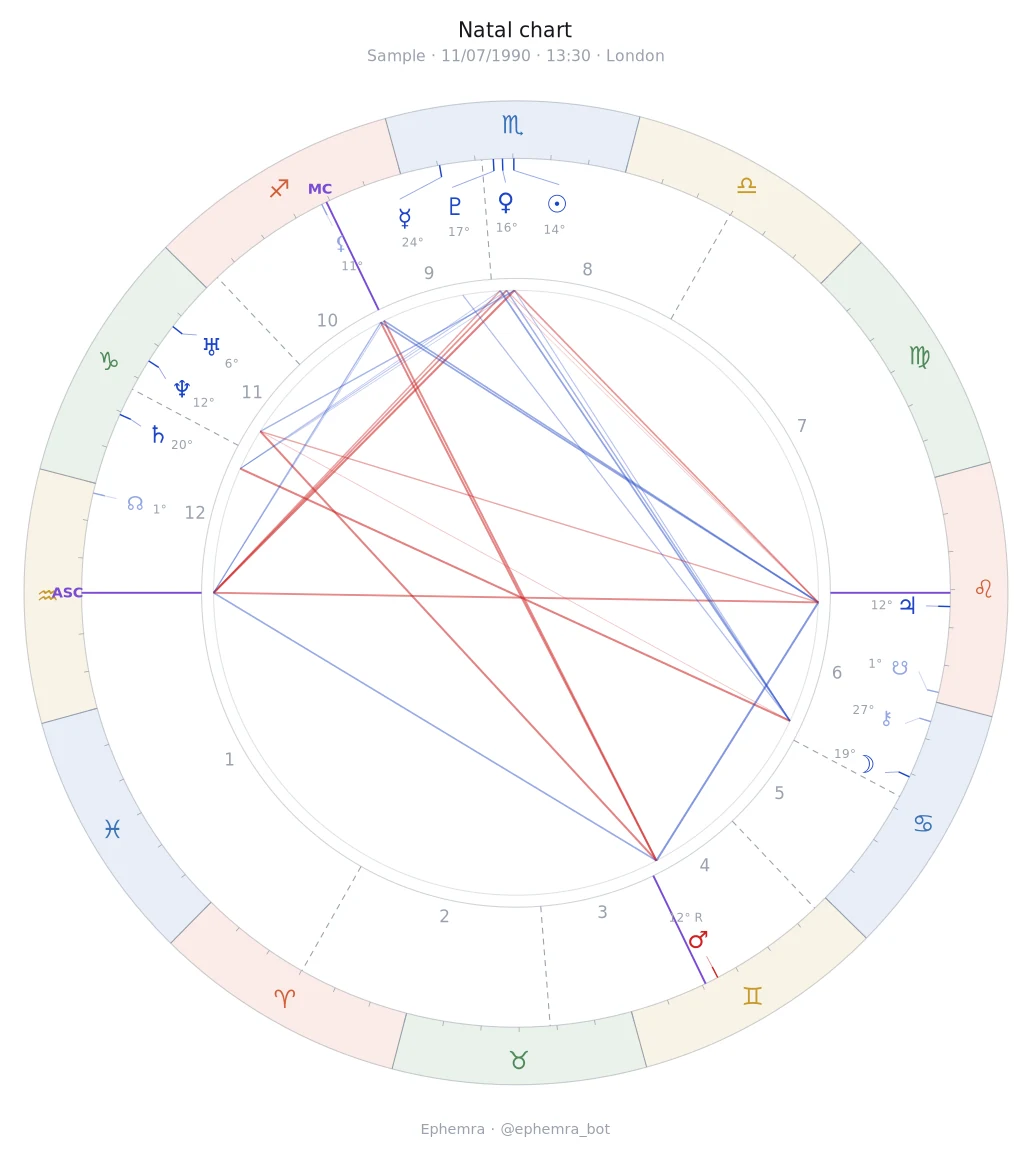

Both are built from the actual positions of the planets at the moment you were born — your rising sign, the houses, the aspects, and the chains that fold the same chart into a core and its orbits. Inside Telegram, with nothing to install.
Every chart here begins as arithmetic. Ephemra computes planetary positions with the Swiss Ephemeris — the same ephemeris professional astrology software runs on — for your date, your time and your city. Houses, aspects, dispositor chains: all of it follows from those numbers.
The readings are written text. They were prepared beforehand from the sources of each method and are selected to match what your chart actually shows. Nothing is composed on the fly while you wait.
Language models are genuinely useful, and there are good tools built on them. But a chart is arithmetic before it is interpretation — and when the arithmetic drifts, everything said afterwards is about somebody else.
You enter a date, a time and a place once. Two different pictures come back — the familiar wheel, and a shape most people have never seen before.
Also called a birth chart: planets in signs and houses, the Ascendant — your rising sign — and the Midheaven, aspects and the configurations they form, and the balance of elements and modalities.
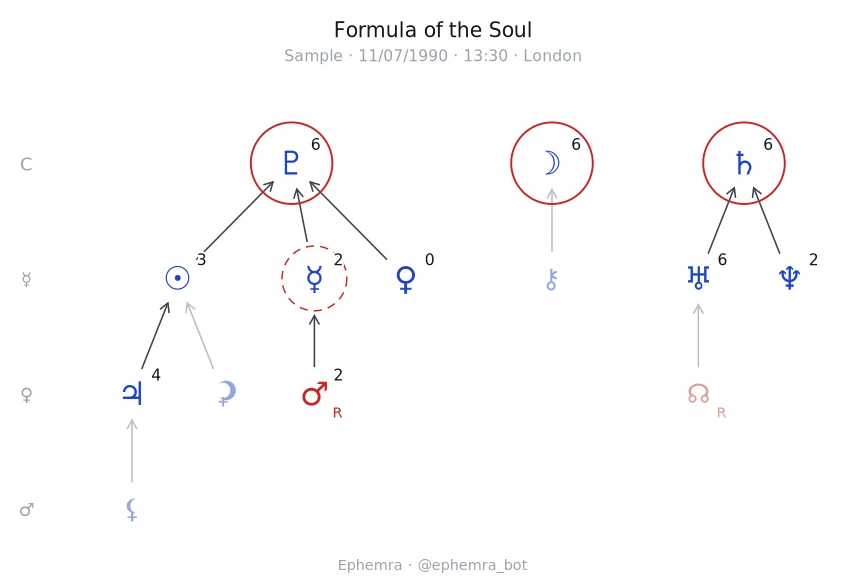
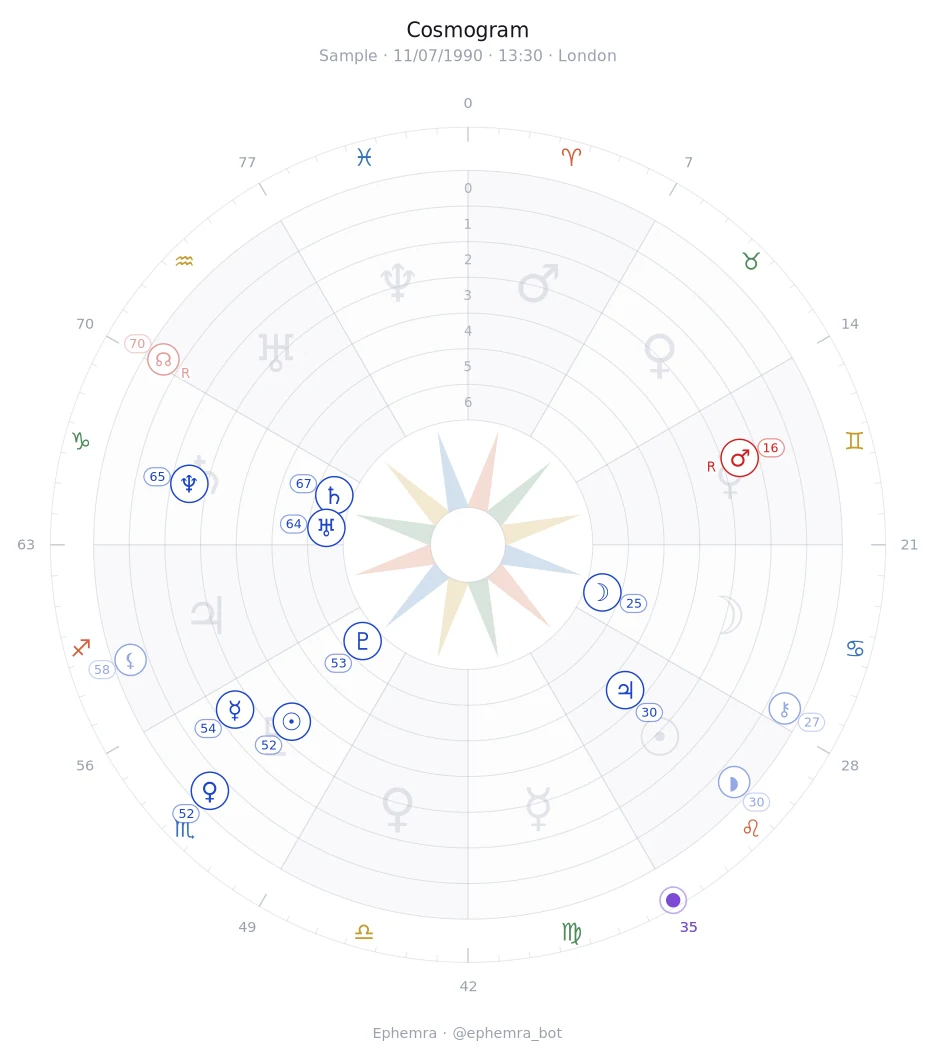
The method of A. A. Astrogor. Dispositor chains fold the same chart into a core and its orbits — which planets you live from, and which ones serve them.
Date, time and city. If you do not know the time, the chart is cast for noon and says so — you can fill it in later.
Both diagrams and a short reading of each, straight into the chat — no payment, no card details, every time. And your first full reading is a gift on top of that.
The long text and two PDF documents. After the free one, a full reading costs 500 Telegram Stars — about $10.
No. The positions are computed from the Swiss Ephemeris, and the readings are written text, prepared in advance from the sources of each method and matched to what your chart shows. No language model writes your reading, and none is called when you press the button.
You still get a reading. The chart is cast for noon and every image says so plainly. Without a time there is no Ascendant — no rising sign — and no houses; everything else holds. You can add the time later and the same chart is recalculated, and a reading you have already opened stays open.
Both charts, both diagrams and a short reading of each are free, every time. The full reading — the long text and two PDF documents — is a gift the first time. After that it costs 500 Telegram Stars, about $10 depending on how you top them up. A one-to-one session with a professional reader usually costs many times more. There is no subscription.
Yes, and that is most of what happens here — a partner, a parent, a friend who is never going to install anything themselves. You enter their details, you get the reading, and you can send it to them. It makes a good present and there is nothing furtive about it. The one place we draw a line is decisions about somebody's livelihood: screening job candidates on birth data is a different thing entirely, and we wrote about why.
A method by A. A. Astrogor that reads a chart through its dispositor chains: which planet rules the sign another planet sits in, followed until the chains close. What comes out is a core and a set of orbits — a different picture from the familiar wheel, built from the same birth data. The long answer, with a worked example, is here.
It takes about a minute: a date, a time, a city. The first full reading is on the house.