The short version
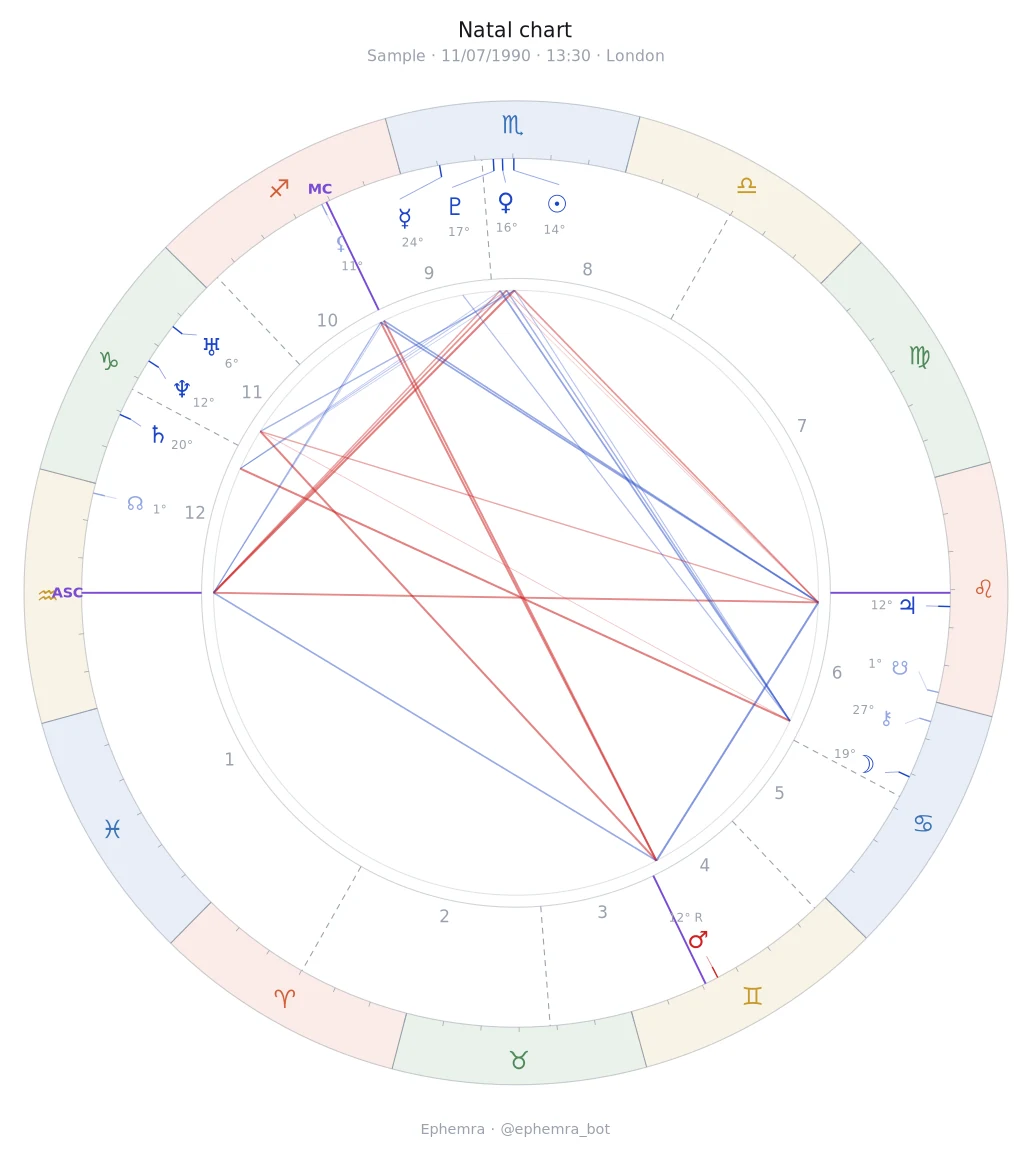
A natal chart asks where things happen. It divides the sky into houses from the horizon at your birth, measures the exact angles between planets, and reads the result area by area — this part of life, that part of life.
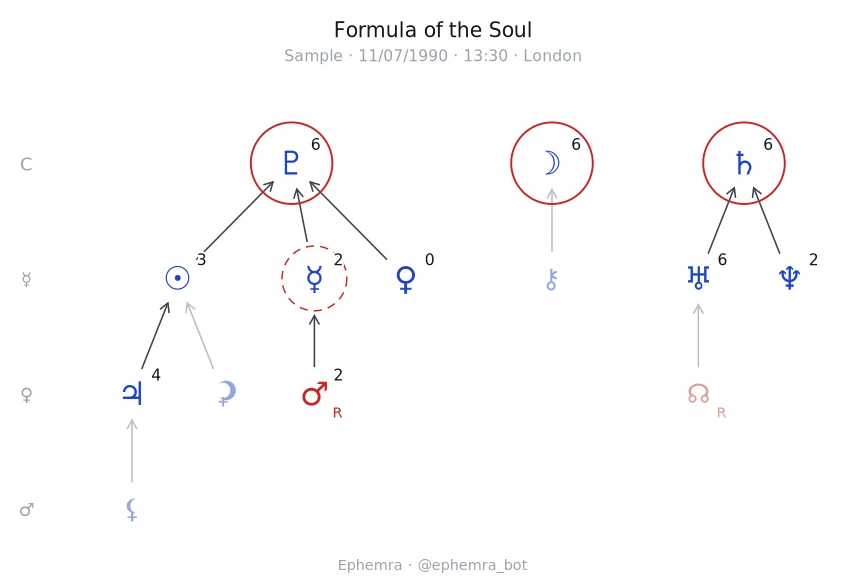
A Formula of the Soul asks what rests on what. It throws away houses, angles and degrees, keeps only the sign each planet stands in, and follows the chain of rulership until it closes. What comes back is a hierarchy, not a map.
Side by side
| Natal chart | Formula | |
|---|---|---|
| Uses the sign | yes | yes |
| Uses the degree | yes | no |
| Uses houses | yes | no |
| Uses aspects | yes | no |
| Needs the birth time | yes | almost never |
| Depends on the place | yes | no |
| Shape of the answer | a map | a hierarchy |
What that costs the formula
Two consequences, and the method owns both. Because the place is never used, the formula does not depend on where you were born. And because only signs matter, everyone born on the same day shares one — the birth time changes it only when the Moon crosses into another sign during that day.
So a formula is not personal in the way a natal chart is. It describes a structure that a whole day's worth of people share. That sounds like a weakness until you notice what it buys: the structure survives an unknown birth time, which is exactly the case where a natal chart loses its Ascendant and all twelve houses.
What that costs the natal chart
The wheel shows everything at once and therefore ranks nothing. Twelve houses, ten planets, forty aspects — all present, all apparently equal. The formula's whole output is a ranking: this is the core, that serves it, that serves the thing that serves it. You cannot get that ordering out of a wheel by staring harder; it is a different computation.
Natal chart
Formula of the Soul
Which to read first
If you know your birth time to the minute and want detail, start with the natal chart — the Ascendant and the houses are where it earns its keep. If you do not know the time, or you have read wheels before and they blur into a list of features, start with the formula: it is short, it is ranked, and it will look unfamiliar even if you have studied astrology for years.
Ephemra builds both from one set of details, so the choice is only about which one you open first.
What neither of them does
Neither names an event, a date or an outcome. Both describe inclinations — the method's own framing is probabilistic, and the wheel is no better at prophecy for being older. Anything that promises otherwise is selling certainty that the arithmetic cannot supply.
See both of yours
One date, one time, one city — two pictures back. The first full reading is a gift.
Open in TelegramMore: how the formula is built, how to read the diagram, the wheel of fate, glossary.